

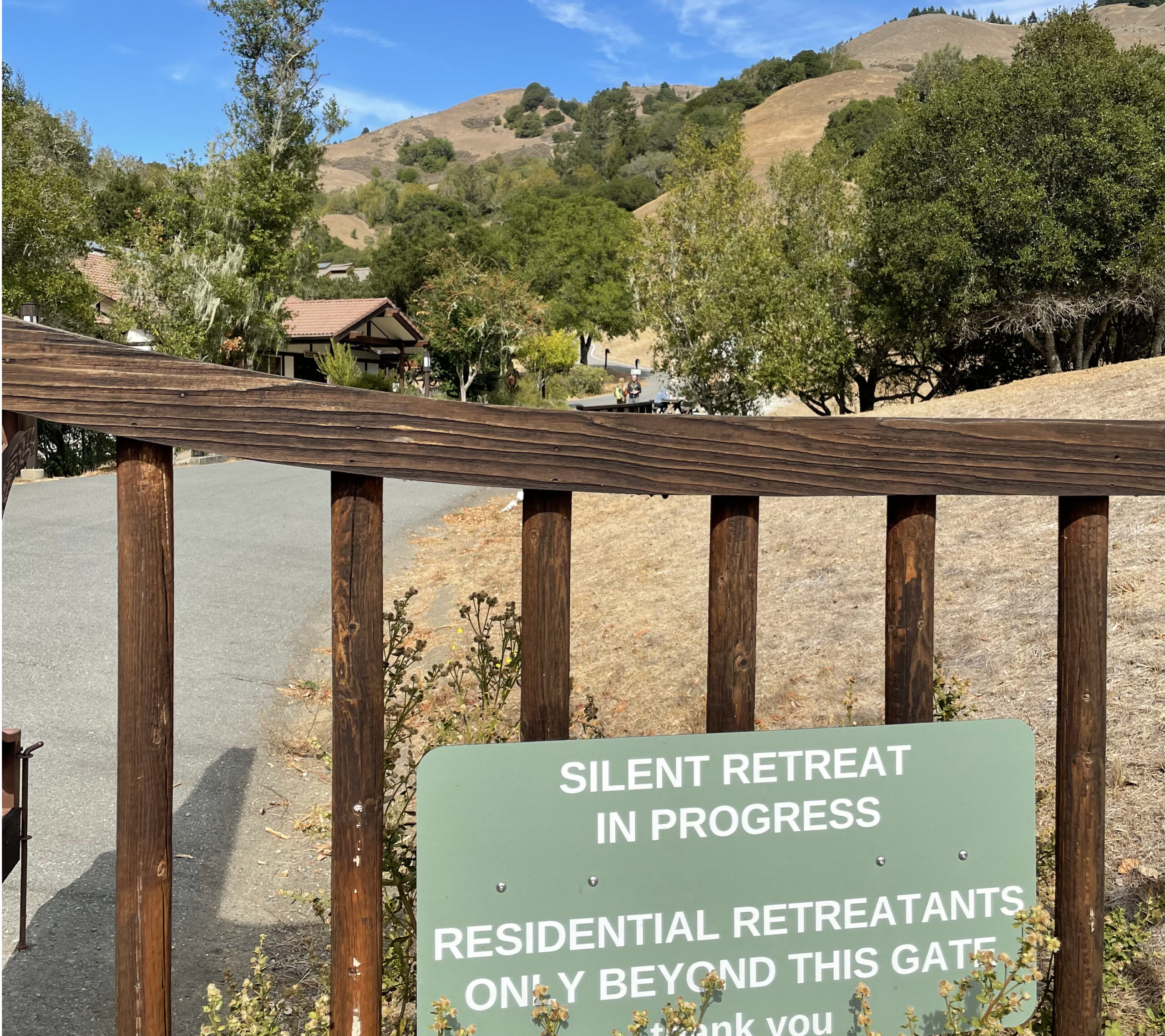


“A true practice leads us into the silence of the forest” — Jack Kornfield, After the Ecstasy, the Laundry (p.26)
Discovering Retreat
I first learned the significance of retreat in my second year of recovery (if we’re not counting rehab). I was invited to a 12-step retreat; a weekend at a local centre where a facilitator guided us through their interpretation of the steps, leaving space for quiet contemplation and fellowship. Was it profound? Yes. Was the coffee burnt and the silence uncomfortable? Also yes. That weekend showed me the power of stepping outside the noise of daily life into stillness, reflection, and connection.
Since then, retreat has become an important part of my recovery. I try to do it at least once a year if I can—it renews my sense of curiosity and wonder and gives a lift to my personal discipline and rituals. Organized retreats are also a chance to meet like-minded people and to practice in the energy of community. One of my closest and lasting friendships began at Kripalu in the Berkshires. We were two Canadians bonding over irreverent humour and a shared dedication to seeking.
Of course, resources don’t always allow for it. Traveling to sit with renowned teachers is a privilege. Over the years I’ve been so fortunate to visit an ashram in the Bahamas, road-tripped back to Kripalu several times, and made the unforgettable journey to Spirit Rock Meditation Centre in Northern California. There are also beautiful options closer to home. I once attended a teacher-led retreat at Sugar Ridge Retreat Centre in Ontario. A simple search will reveal endless possibilities with teachers, traditions, and budgets to suit what you need.
Learning to Build Retreat
Several years ago, while studying meditation and mindfulness with my mentor, Rolf Gates, we turned to the topic of offering retreat as teachers. The assignment was to first design one for ourselves. Rolf gave us the core elements: teachings interwoven with sitting and walking meditation, rest, and nourishment. We could also include movement, contemplative practices, and creative exercises. But the heart of his teaching was coming into the felt experience of the present moment. Putting the body, the breath, and the heart in one place.
At the time, I lived in a small apartment on the grounds of the treatment centre where I worked, surrounded by trees and lakes. My living room doubled as my office, kitchen, a meditation hall, and yoga space all in a tiny 200 square foot area. Nothing says spiritual practice like tripping over your yoga mat to get to the fridge. But, it had a gas fireplace and a window that caught the sunrise each morning. It wasn’t fancy or spacious, but it was cozy and quiet, infused with the centre’s mission of healing and discovery.
I chose my dates, let the people I might pass on walks or errands know I’d be in silence, and created a simple rhythm: meditation, yoga, forest walks, reading, teacher talks, journaling, nourishing food, and sleep. What I remember most is how sweet it felt—simple, grounding, and deeply present. I was surprised that I could guide myself to that place.
I’ve returned to this practice many times since, whenever I feel the pull to retreat but can’t, or don’t want to, join a larger group.
Knowing When It’s Time
Over the years I’ve learned to recognize the signals—restlessness, irritability, protective patterns creeping back in, the feeling of being sharp at the edges. Which is to say, if I’m snapping at people for breathing too loudly, it’s time to retreat. But, it’s also a deep and lonely weight of worry that sits on my chest and it hurts like hell. These are all nudges that tell me it’s time to still and soften.
Other times it feels less like repair, more like invitation toward source, toward the sky and trees, toward the traditions of practice that have been growing roots in my mornings for years.
Sometimes that means attending retreats with teachers I admire. Sometimes it means creating my own at home. And sometimes, when I’ve wanted elements that I don’t have in my own space, it has meant finding a modest rental nearby. Each version has offered me what I needed.
A Simple Framework for Building Retreat
Intention
Every retreat begins with a seed. A simple question: What am I longing for? Rest? Clarity? Inspiration? Groundedness? Deeper awareness or understanding of a particular practice or wisdom? Even the quietest inner whisper can be a guide to shaping the days. Write it down. Let it sit at the center of everything you build for your retreat.
Rolf writes in his book Daily Reflections on Addiction, Yoga, and Getting Well, “your goal is the mountain you are climbing. Your intention is the manner in which you take each step…The role of intention is to translate one’s purpose into a lived reality. If a goal organizes, an intention informs. An intention places the whole of our heart into the space between the in breath and the out breath” (p.60).
Container
Choose the size of your retreat. How much time can you truly withdraw from the usual activities of your life? Block it out in your calendar as a real commitment. Let others know that you’ll be offline or available only at certain times.
Then choose your place—your own home, or a borrowed space. What matters most is that you have some control over the level of distraction and the vibe. And vibe matters! Prepare your space so that it feels like an invitation. Clear away clutter, add candles, pillows, blankets, whatever makes it feel warm and supportive. Some seasons call for expansiveness; others for cocooning. Consider all the senses.
Gather your supplies and tools—nourishing food, reading and writing materials, equipment for movement and creative exploration, and anything else that feels essential.
Stillness & Presence
The heart of retreat is stillness. Sitting quietly, following the breath, resting in silence. Naps are welcome. Doing nothing is very much welcome. This is fertile ground for truly being with yourself, for better or worse. Know that the internal noise might get louder before it gets quieter.
In When Things Fall Apart, Pema Chödrön tells of two Tibetan words for mind: sem and rikpa. The first being the constant stream of chatter “planning and worrying…wishing and wanting, picking and choosing.” The latter translating to “intelligence” or “brightness.” And she writes, “whenever we stop talking to ourselves, rikpa is continually here” (p.27).
Movement
Stillness deepens when balanced with movement. Gentle yoga, stretching in the morning light, or long, meandering walks. Mindful tending, the old adage “chop wood, carry water,” done slowly and with awareness. Wise effort. Gentle over rigorous; presence over performance. If your body asks for more, bring on the sweat, but let it nourish rather than drain.
Contemplation & Reflection
Retreat invites space for listening more deeply. Journaling, free-writing, or responding to thoughtful prompts can help untangle what has been circling within. Sitting with the words of a wise teacher in a book or recording. Pulling cards or turning to other tools of divination. Not for fortune-telling, but as a way of drawing out intuition and giving shape to what stirs beneath conscious thought. Intentional reflection catches the threads that might otherwise slip away unnoticed.
Creative Expression
Let imagination move. Draw, paint, sing, dance, weave words into stories or twigs and leaves into form and structure. Let it be playful and open-ended.
Nourishment
Feed the body as well as the soul. Prepare simple, wholesome meals. Eat slowly. Rest deeply. Let yourself be restored. Nourishment also means setting aside what doesn’t serve you: the screens, the headlines, and the habits that are draining your creative energy.
Connection to Nature
If possible, be outside. Walk slowly, notice textures and colours, listen to the birds. Lean against trees, watch the stars, sit by or in water. Nature is medicine, reminding us that we belong to something enormous and vibrant.
Integration
As your retreat closes, make time to gather what has unfolded—the profound and the mundane, the serene and the chaotic. Write about it, draw about it. Note the practices you want to carry forward. Even a single word or phrase can serve as a talisman. Integration allows retreat to ripple outward, so it doesn’t end the moment you return home but threads itself into the fabric of daily life. I’ve found that months later, I’m still downloading insights from those practices.
Final Note
Leave space. Don’t pack your retreat too tightly or rigidly. The pauses, the naps, the frustrations and imperfections are often where the magic lives. When confronted with physical, emotional, or mental discomfort, don’t attempt to control or avoid it. See if you can soften to include it into your experience.
My Upcoming Retreat
For the first days of September, I’ll be taking myself on retreat again. Sadie (who is also due for some time in the woods) and I are heading to a cabin for a few nights. I chose it because it puts me close to the elements and off the grid: a wood stove, a hammock strung between the trees, even a wood-fired sauna and hot tub. I don’t have a tub in Toronto, and I miss the healing ritual of soaking in hot water. I miss the quiet of the woods, looking up at the stars, and wandering the forest with Sadie.
I definitely need a digital detox, and I need to dig into some of the things that have been stirring up fear responses lately. Since I’ll be away for the week, I’ll have a couple of virtual client sessions plugged in, but I’ll hold strong boundaries around how and when I turn on my devices.
Over the next two weeks, I’ll be working through the framework above to choose the elements of a retreat that support my intention. September feels like the right moment. It carries the energy of a new cycle, a threshold into autumn, a season of slowing. A natural pause to look back at what has been and to wonder about the path ahead.
Retreat as a Practice
Retreat has become part of the rhythm of my life, sometimes guided, sometimes self-made; sometimes at home, sometimes far away. What matters most is not the exact form but the intention: to pause, to settle, to listen, to remember. Focusing on intention and attention.
Maybe it’s time for you too. Even a single day at home can create meaningful shifts. I’d love to hear if you try it. If you would like more support in building a morning practice or connecting with retreat, book some time with me and we can chat about coaching options.
When I return, I’ll attempt to share what this next retreat has revealed.
References
Chödrön, P. (1997). When things fall apart: Heart advice for difficult times. Shambhala.
Gates, R. (2012). Daily reflections on addiction, yoga, and getting well. Hay House.
Kornfield, J. (2000). After the ecstasy, the laundry: How the heart grows wise on the spiritual path. Bantam.